Pinot Noir and Syrah are both red wine grapes, but in Oregon they tell very different stories. Pinot Noir dominates the state’s vineyards and is closely associated with the cool Willamette Valley, while Syrah is more commonly grown in Oregon’s warmer regions.
The difference comes down to more than grape variety, it is also about climate, vineyard site, ripening, and place.
Pinot Noir vs. Syrah in Oregon
- Pinot Noir is Oregon’s leading wine grape, representing 59% of planted acreage and 58% of production in the latest 2025 Oregon Vineyard & Winery Census.
- Syrah accounts for about 4% of Oregon’s planted acreage and is most commonly found in the Columbia Valley, Southern Oregon, and the Snake River Valley.
- Willamette Valley Pinot Noir benefits from warm days, cool nights, and a long growing season that supports gradual ripening while retaining acidity.
- Southern Oregon Syrah benefits from warmer growing conditions, while the region’s many microclimates also allow cooler sites to produce Pinot Noir.
- In the glass, Pinot Noir generally leans toward red fruit, freshness, and fine tannins, while Syrah tends toward dark fruit, spice, deeper color, and firmer structure.
The short answer: Pinot Noir is generally the better fit for Oregon’s cooler winegrowing areas, while Syrah performs particularly well in warmer parts of the state. But the most interesting part is what happens when climate and grape variety meet.
Pinot Noir vs. Syrah: What’s the Difference?
Before looking at Oregon’s geography, it helps to understand the basic differences between the grapes.
| Characteristic | Pinot Noir | Syrah |
| Grape skin | Thin | Thick |
| Typical body | Light to medium | Medium to full |
| Typical fruit character | Cherry, raspberry, cranberry | Blackberry, plum, black fruit |
| Tannin | Generally fine and moderate | Generally firmer and more pronounced |
| Acidity | Often bright and fresh | Varies considerably by climate and site |
| Color | Typically lighter | Typically deeper |
| Oregon association | Strongly associated with Willamette Valley | More common in warmer regions |
| Oregon planted acreage | About 59% | About 4% |
These are broad tendencies, not fixed rules. Vintage, vineyard elevation, exposure, farming decisions, harvest timing and winemaking can all change the final expression.
Oregon Wine Board describes Pinot Noir as the state’s flagship variety and Syrah as a warm-climate variety that, in Oregon’s moderate regions, can balance richness, depth and acidity.
Why Pinot Noir Thrives in the Willamette Valley
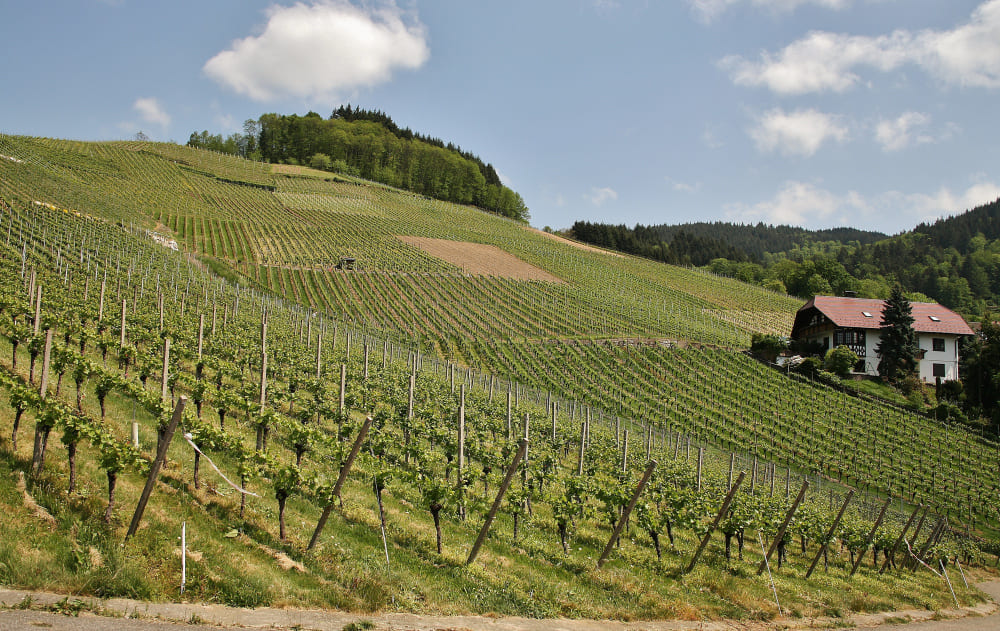
Pinot Noir is a grape variety with thin skin that thrives in cool weather. The Willamette Valley is a place for Pinot Noir to grow because it has warm, not-too-hot summers, cool nights, and a long ripening season. This means Pinot Noir can ripen slowly while retaining its acidity.
If you look at the numbers, you can see why Pinot Noir does well in the Willamette Valley. During the summer, it is usually 78.3°F during the day and 52.2°F at night from June to August. The whole growing season gets about 2,285 degree-days of heat, which is just right for Pinot Noir.
The Coast Range and Cascade Mountains also help make the weather in the valley really steady, which is what Pinot Noir needs to ripen. Now the Willamette Valley grows about 84% of Oregon’s Pinot Noir, which makes it the most important place in the state for Pinot Noir. The Willamette Valley is what people think of when they think of Oregon Pinot Noir.
Willamette Valley climate by the numbers
Current regional data gives a useful picture:
- 78.3°F typical June–August daytime high
- 52.2°F typical June–August nighttime low
- 79°F / 50°F typical June–September high/low
- 3.27 inches typical June–September rainfall
- 2,285 degree-days of April–October heat accumulation
Those numbers matter because Pinot Noir benefits from a growing season that provides enough warmth for ripening without consistently pushing the vines into extreme heat.
The result can be a wine with fresh acidity, red-fruit character, fine tannins and detailed aromatics.
Why Syrah Tells a Different Oregon Story
Syrah needs a different growing environment than Pinot Noir. It is a warm-climate variety that can produce deeply colored wines with dark fruit, spice, richness and firm structure. In Oregon, Syrah is most commonly grown in Southern Oregon, the Columbia Valley and the Snake River Valley.
Southern Oregon shows why location matters. The region has about 170 microclimates, from cooler sites that can support Pinot Noir to warmer, drier areas where Syrah and other warm-climate grapes ripen more reliably.
So Syrah doesn’t require all of Oregon to be warm. It needs the right site, one with enough heat and the right growing conditions to reach full ripeness while maintaining balance.
Oregon’s Climate Is More Diverse Than You Think
The contrast between Pinot Noir and Syrah reveals something important about Oregon wine.
The state is not simply a cool-climate wine region.
It contains a wide range of elevations, landscapes, and microclimates.
Willamette Valley: Pinot Noir country
The Willamette Valley is one of North America’s coolest major winegrowing regions and is particularly suited to cool-climate grapes. Pinot Noir is by far the dominant variety.
The valley currently accounts for about 84% of Oregon’s Pinot Noir production, according to Willamette Valley Wineries Association data.
Southern Oregon: a much wider range
Southern Oregon is considerably more diverse.
Its valleys, mountains, and changing elevations create conditions for both cool- and warm-climate varieties. The Oregon Wine Board specifically identifies warmer, more arid areas as suitable for Syrah and other heat-loving grapes.
That diversity is one of the defining characteristics of Oregon wine.
How Climate Changes the Flavor of Pinot Noir and Syrah
Climate doesn’t simply determine whether grapes ripen.
It influences how quickly they ripen and the balance they reach at harvest.
Ripening
Grapes need enough warmth to mature, but rapid ripening is not necessarily the goal.
A longer, moderate growing season can give flavor and aroma development more time to progress alongside sugar accumulation.
Acidity
Cooler conditions can help grapes retain natural acidity.
That acidity contributes freshness and balance, particularly in wines such as Oregon Pinot Noir.
Sugar and alcohol
As grapes mature, sugar accumulates.
Harvest decisions therefore involve finding a balance between sugar, acidity, flavor development, and tannin, not simply waiting for the highest possible sugar level.
Tannin and color
Pinot Noir’s thin skins generally contribute less color and tannin than Syrah’s thicker skins.
That helps explain one of the most obvious visual differences between the two varieties: Pinot Noir is usually lighter in color, while Syrah can be intensely dark.
What Does Oregon Pinot Noir Taste Like?
Oregon Pinot Noir is known for freshness, bright acidity, and expressive fruit. Depending on the vineyard and vintage, you may find notes of:
- Red cherry and raspberry
- Cranberry and strawberry
- Floral and spice notes
- Earthy or savory tones
It is often lighter in color with fine tannins, giving the wine an elegant, lively feel rather than a heavy one.
The exact profile changes with the vineyard. A Dundee Hills Pinot Noir, for example, can show bright red fruit, earthy notes, and a silky texture shaped by the region’s volcanic soils.
What Does Oregon Syrah Taste Like?
Oregon Syrah takes a darker, more structured approach. It is typically deeply colored, rich, and spicy, with flavors that can include:
- Blackberry and black cherry
- Plum and dark fruit
- Violet and black pepper
- Savory and earthy notes
Syrah’s style also depends heavily on where it is grown. Warmer sites can bring more richness and concentration, while cooler conditions can highlight freshness, spice, and savory character.
That regional variation is what makes comparing Oregon Pinot Noir vs. Syrah so interesting: the grape matters, but place matters just as much.
Can Syrah Grow in the Willamette Valley?
The Willamette Valley is best known for cool-climate grapes, especially Pinot Noir. Syrah generally needs more heat to fully ripen, making Oregon’s warmer regions a stronger fit.
However, elevation, slope, row orientation, wind exposure, and microclimate can create significant differences between vineyards.
So the real question isn’t simply, “Can Syrah grow in the Willamette Valley?” but “Does a particular vineyard site provide the conditions Syrah needs to ripen successfully?”
Pinot Noir vs. Syrah: Which Wine Should You Choose?
If you prefer bright acidity, red fruit and a more delicate structure, Pinot Noir is likely the better fit.
If you prefer dark fruit, spice, deeper color and firmer structure, Syrah may be more your style.
Pinot Noir is a natural match for:
- Salmon
- Roast chicken
- Duck
- Pork
- Mushrooms
- Roasted vegetables
Syrah works well with:
- Lamb
- Steak
- Grilled meats
- Barbecue
- Sausage
- Braised dishes
Of course, wine pairing is personal. The best pairing is usually the one that makes both the food and wine more enjoyable.
Why Dundee Hills Is Such an Important Pinot Noir Region
For Ambar Estate, the broader Oregon climate story becomes much more specific in the Dundee Hills.
Dundee Hills is one of the Willamette Valley’s recognized AVAs and is known for its elevation, volcanic soils, and conditions well suited to Pinot Noir. The Oregon Wine Board notes that Dundee Hills has characteristic red volcanic Jory soils.
At Ambar Estate, our vineyard sits in the Dundee Hills, where elevation, exposure, soil, and climate all influence how the vines grow.
That site-specific approach matters because Dundee Hills Pinot Noir is particularly expressive of its growing conditions. Even vineyards within the same broader region can produce wines with different textures, aromas, and balance.
For a deeper look at the vineyard itself, see our guide to Dundee Hills terroir and Pinot Noir and our article on Jory soil and winegrowing.
Pinot Noir vs. Syrah: The Bigger Oregon Wine Story
Oregon’s wine story is bigger than Pinot Noir. The state’s diverse climates and soils allow different grapes to thrive in different places. Pinot Noir shines in the cool Willamette Valley, while Syrah performs better in warmer regions such as Southern Oregon.
The idea is simple: great wine starts with matching the right grape to the right place. That diversity is what makes Oregon so interesting to explore.
Pinot Noir vs. Syrah FAQs
Is Pinot Noir or Syrah better for Oregon’s climate?
It depends on the region. Pinot Noir is especially well suited to the cool Willamette Valley, while Syrah performs particularly well in warmer Oregon growing regions such as parts of Southern Oregon.
What is the main difference between Pinot Noir and Syrah?
Pinot Noir is generally lighter in color and body, with red-fruit flavors, bright acidity and finer tannins. Syrah typically has a deeper color, darker fruit, more structure and pronounced spice.
Where is Syrah grown in Oregon?
Syrah is most commonly grown in Southern Oregon, the Columbia Valley and the Snake River Valley.
Why does Pinot Noir grow so well in the Willamette Valley?
The Willamette Valley’s cool, marine-influenced climate provides warm days, cool nights, and a long growing season that allows Pinot Noir to ripen gradually while maintaining acidity.
Can Syrah grow in the Willamette Valley?
Yes, Syrah can be grown in selected sites, but it is much less common than Pinot Noir. The main challenge is providing enough heat and growing-season conditions for the variety to ripen properly.
Is Syrah always a full-bodied wine?
No. Syrah’s style can change considerably with climate, vineyard site, vintage and winemaking. Cooler sites can produce fresher, more peppery and savory expressions.
Which is lighter, Pinot Noir or Syrah?
Pinot Noir is generally lighter in color and body than Syrah, although individual wines can vary considerably.