
Have you ever tasted two Pinot Noirs from the same Oregon winery and noticed they were quite different? The vineyard may be the same, but the year can change the story.
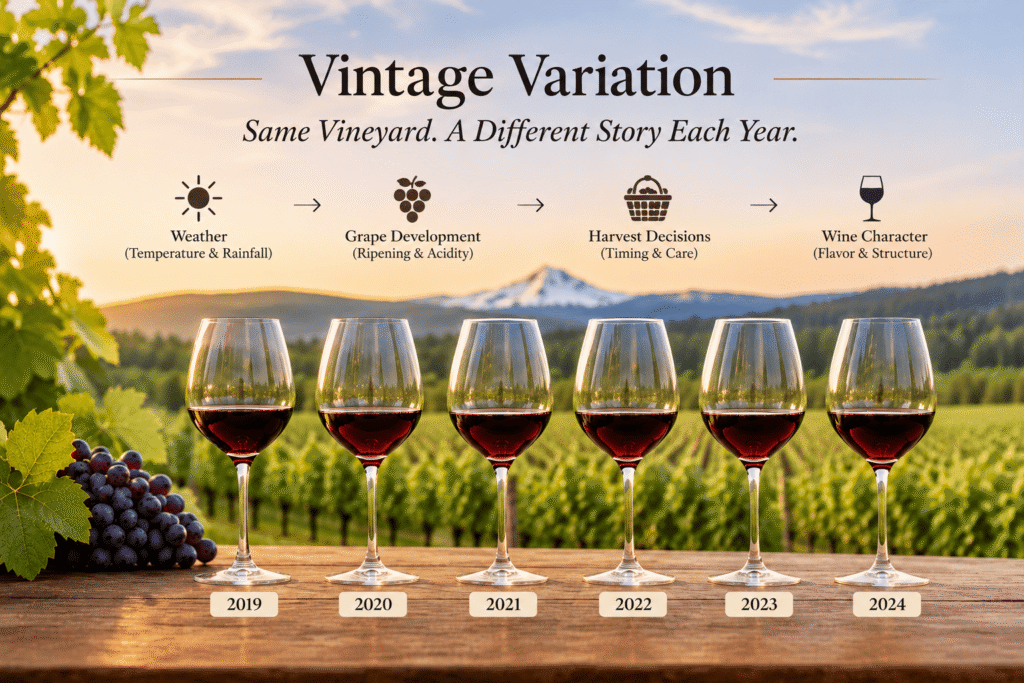
That is the essence of vintage variation. Every growing season brings different temperatures, rainfall and harvest conditions. These changes influence how grapes develop and the decisions winemakers make along the way.
The Willamette Valley’s recent vintages offer some interesting examples. From the cooler conditions of 2019 to the wildfire challenges of 2020 and the spring frost of 2022, each year presented a different set of circumstances.
Understanding these differences helps explain why Oregon Pinot Noir can express a new character with every harvest.
What Is Vintage Variation in Wine?
Vintage variation refers to the differences between wines produced from grapes harvested in different years.
Even when a winery uses fruit from the same vineyard, the growing conditions are never exactly alike. Temperature, rainfall, sunlight and the timing of seasonal changes all influence grape development.
These factors can affect:
- Fruit ripeness: How quickly grapes develop sugar and flavor.
- Acidity: How the balance of natural grape acids changes during ripening.
- Fruit condition: Whether grapes remain healthy through harvest.
- Harvest timing: When growers decide the fruit is ready to pick.
The result is that two vintages from the same producer can have different expressions. Neither is automatically better; each reflects the conditions of its growing season.
How Weather Shapes Pinot Noir From One Vintage to the Next
Weather affects grapes differently at each stage of the growing season.
| Growing-season condition | Possible effect on the vineyard | Why it matters |
| Spring frost | Damages emerging buds | Can reduce the potential crop |
| Summer heat | Speeds up ripening and may stress vines | Requires careful fruit monitoring |
| Limited rainfall | Reduces water availability | Can affect vine growth and fruit development |
| Rain near harvest | Creates additional fruit-health concerns | May influence picking decisions |
| Warm, dry autumn | Can provide a wider harvest window | Gives growers more flexibility |
These effects are not automatic. Their impact depends on when the weather occurs, the vineyard’s location and how growers respond.
For example, a spring frost may initially threaten the crop, but favorable weather later in the year can help vines recover. Similarly, warm weather can support ripening, but extreme heat may create new challenges.
This is why looking at the complete growing season matters more than judging a vintage by one weather event.
Oregon Pinot Noir Vintages: A Comparison of 2019–2024
The following table highlights how conditions changed across six recent Willamette Valley vintages.
| Vintage | Key growing-season conditions | What made the year distinctive |
| 2019 | Cooler conditions and late-season rain | A more traditional cool-season harvest with difficult late-season weather |
| 2020 | September wildfires and smoke | Smoke exposure created challenges for some wineries |
| 2021 | Extreme summer heat and dry conditions | Rapid ripening required close vineyard monitoring |
| 2022 | Spring frost followed by a warm, dry autumn | A difficult beginning followed by a favorable finish |
| 2023 | Warm summer and early harvest | Fast fruit development and careful picking decisions |
| 2024 | Cool spring followed by summer heat | A slow start gave way to a favorable autumn harvest window |
A Closer Look at Each Vintage
2019: A Cooler Growing Season
The 2019 season brought cooler conditions and significant rainfall, including rain close to harvest. Growers had to balance fruit development with changing autumn weather. Regional reporting described many wines as fresh and balanced, although individual results varied.
2020: Wildfire Smoke Changed the Harvest
The 2020 season initially showed promise, but September wildfires brought smoke across parts of Oregon. Exposure differed between vineyards, and some wineries faced difficult decisions about fruit selection and winemaking. Not every producer experienced the same impact.
2021: Extreme Heat and Dry Weather
The 2021 season included an exceptional heat event, with temperatures reaching 116°F in parts of the region. Prolonged dry conditions also created challenges. Growers needed to monitor fruit closely as warm weather accelerated ripening.
2022: A Challenging Start, a Favorable Finish
An April frost damaged emerging buds in parts of the Willamette Valley, raising concerns about crop size. However, warmer conditions later in the season, particularly during October, helped many vineyards complete ripening under favorable conditions.
2023: A Warm Season and Earlier Harvest
A cooler start gave way to a warm summer. Fruit developed quickly, and the region experienced an early harvest. Heat-related fruit damage in some vineyards made careful sorting and harvest timing especially important.
2024: A Slow Start Followed by a Strong Finish
The season began with a cool spring and slower vine development. Summer heat followed, but favorable autumn conditions gave many growers flexibility when planning harvest. The Oregon Wine Board described the season as an encouraging harvest year.
These are regional observations, not a guarantee of how every Dundee Hills vineyard or individual winery’s wines performed.
How Does Vintage Variation Influence Pinot Noir’s Character?
Changes in the growing season can influence several aspects of the finished wine.
Fruit flavor: The pace and conditions of ripening can influence whether a wine expresses fresher red-fruit notes or riper, darker fruit characteristics.
Acidity: Temperature and grape maturity influence natural acidity. Harvest timing also matters, as winemakers work to find the balance they want in the fruit.
Structure and texture: Grape maturity and the condition of the skins and seeds can influence tannin development. Fermentation and extraction choices also shape the wine’s texture.
Alcohol and balance: Sugar levels at harvest influence potential alcohol. However, overall balance depends on more than ripeness alone.
These are possible differences, not fixed rules. A warm vintage does not always produce a heavier wine, and a cooler vintage does not automatically mean higher acidity. Vineyard conditions and winemaking decisions matter too.
Why Winemakers Adjust Their Decisions Every Year
No two harvests follow exactly the same plan. Vineyard teams monitor the season and adjust their approach as conditions change.
This may involve managing the canopy during hot weather, monitoring fruit health after rainfall or checking grape maturity more frequently during rapid ripening.
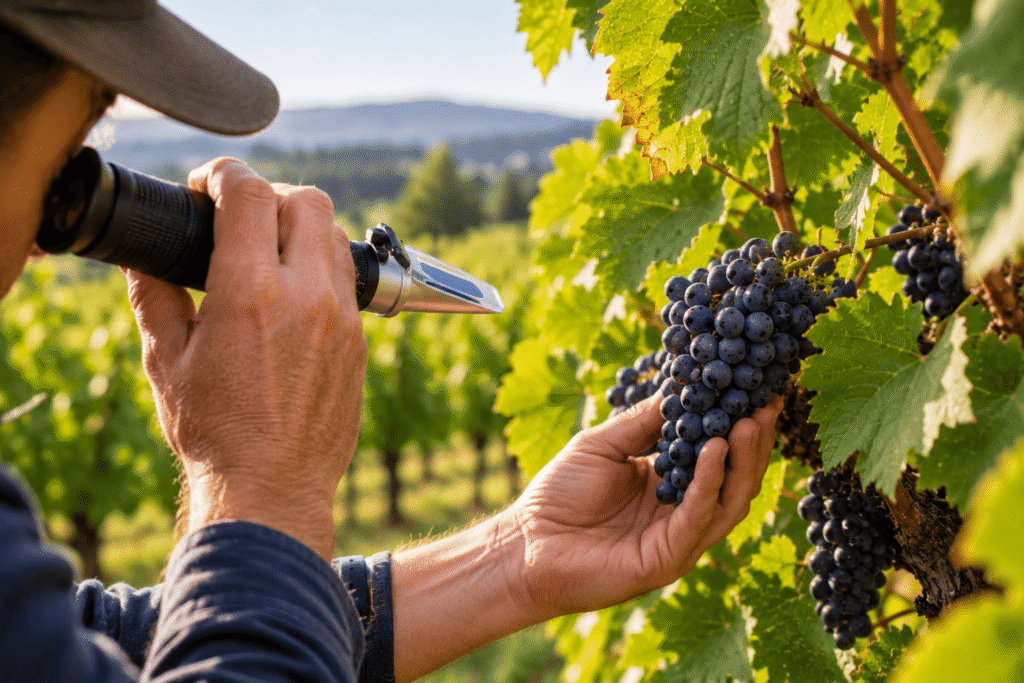
Harvest timing is particularly important. Winemakers consider sugar, acidity, flavor development and fruit condition rather than relying on a single measurement.
Once the grapes reach the winery, decisions about sorting, fermentation and extraction also depend on the condition of the fruit.
As a result, a consistent winemaking philosophy does not mean making every vintage exactly the same. It means responding thoughtfully to the fruit each year.
For more on this process, read our guide to How Winemakers Decide When to Harvest Grapes.
What Should You Look for When Choosing an Oregon Pinot Noir?
Vintage information can help you understand a wine before opening the bottle.
- Check the vintage year: It tells you when the grapes were harvested.
- Read producer notes: Look for details about that year’s growing conditions and harvest.
- Consider the vineyard: Different sites can respond differently to the same weather.
- Compare different years: Tasting wines from the same producer across vintages can reveal how the season influenced their character.
A vintage chart is a useful starting point, but it should not be treated as a universal ranking of good and bad years. The producer, vineyard and individual wine matter just as much.
Every Vintage Tells a Different Story at Ambar Estate
At Ambar Estate in the Dundee Hills, our vineyard is central to the way we approach wine. Our estate-grown Pinot Noir and Chardonnay reflect a commitment to thoughtful farming and careful winemaking.
Each growing season brings its own conditions, and understanding the vineyard means responding to those changes rather than expecting every harvest to follow the same pattern.
Through careful fruit handling, native fermentation and a vineyard-led approach, we aim to let the character of the fruit remain central to each wine.
Explore Ambar Estate’s wine collection or learn more about our land and vineyard philosophy.
FAQs About Oregon Pinot Noir Vintages
Why does Oregon Pinot Noir taste different every year?
Oregon Pinot Noir changes from year to year because growing-season conditions are never exactly the same. Temperature, rainfall, frost, heat and harvest timing influence grape development. Vineyard management and winemaking decisions also contribute to the final character of each vintage.
What is vintage variation in wine?
Vintage variation refers to the differences between wines made from grapes harvested in different years. These differences can reflect changes in weather, growing conditions, fruit development, harvest timing and winemaking decisions.
Does a warm vintage produce better Pinot Noir?
Not automatically. Warm conditions can support grape ripening, but excessive heat may create challenges such as sunburn, dehydration or rapid sugar accumulation. The outcome depends on the full growing season, vineyard conditions and how the fruit is managed.
How does rainfall affect Oregon Pinot Noir?
Rainfall affects vine growth, water availability and fruit condition. Its timing is particularly important. Rain during the growing season can influence canopy development and disease pressure, while rainfall near harvest may affect picking decisions and the condition of the grapes.
Was the 2020 Oregon Pinot Noir vintage affected by wildfire smoke?
Wildfires and smoke created significant challenges for Oregon wineries in 2020. However, exposure varied by vineyard location and conditions. Some producers reported little impact, while others needed to make careful decisions about fruit selection and winemaking.
Which Willamette Valley Pinot Noir vintages should I explore?
The 2019–2024 vintages offer interesting examples of changing growing-season conditions. Rather than treating one year as universally better, explore wines from different producers and vineyards to understand how each season was expressed.
Every Year Brings a New Expression of the Vineyard
No two growing seasons follow exactly the same path. A spring frost, a stretch of summer heat, a dry period or a favorable autumn can all influence the decisions made throughout the harvest.
For Oregon Pinot Noir, these differences are part of the wine’s character. They connect each bottle to a particular year, a particular growing season and the choices made by the people working in the vineyard and winery.
Understanding vintage variation gives us another way to appreciate Pinot Noir: not simply as a wine from a place, but as an expression of that place in a particular year.